Arts for Health and Well-being Network meets in Szczecin, Poland
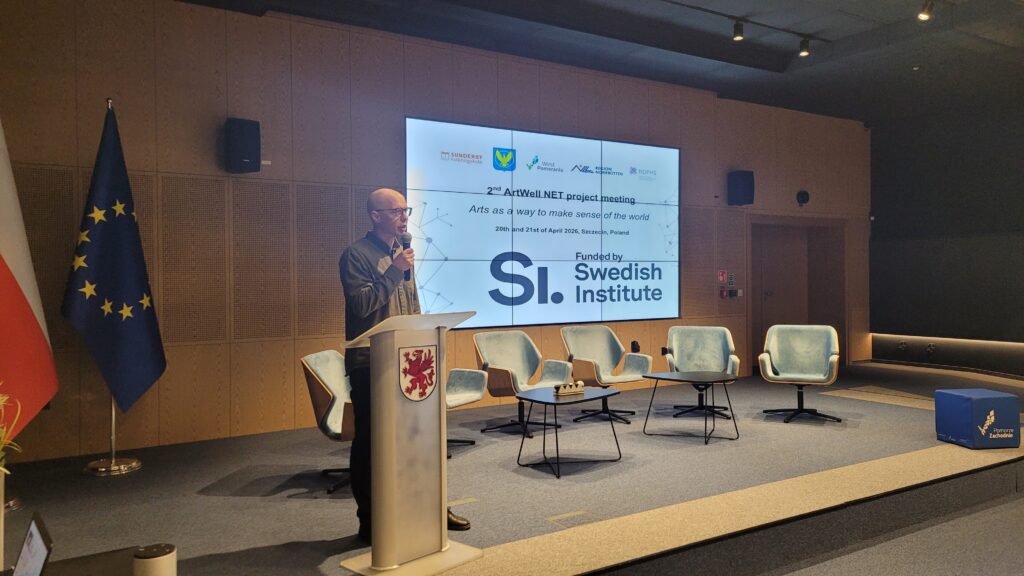
Following the first ArtWell NET meeting in Stockholm in December 2025, the second gathering was organised in a hybrid format in Poland, bringing together specialists and practitioners from across the Baltic Sea Region and Ukraine to exchange knowledge and strengthen cooperation. Discussions focused on how public health professionals, link workers, and art facilitators can work together to build effective systems of arts-based social prescribing.
The opening session featured representatives of the project partners: Krzysztof Żarna from the West Pomeranian Region in Poland and Elias Sandling from Sunderby Folk High School in Sweden.
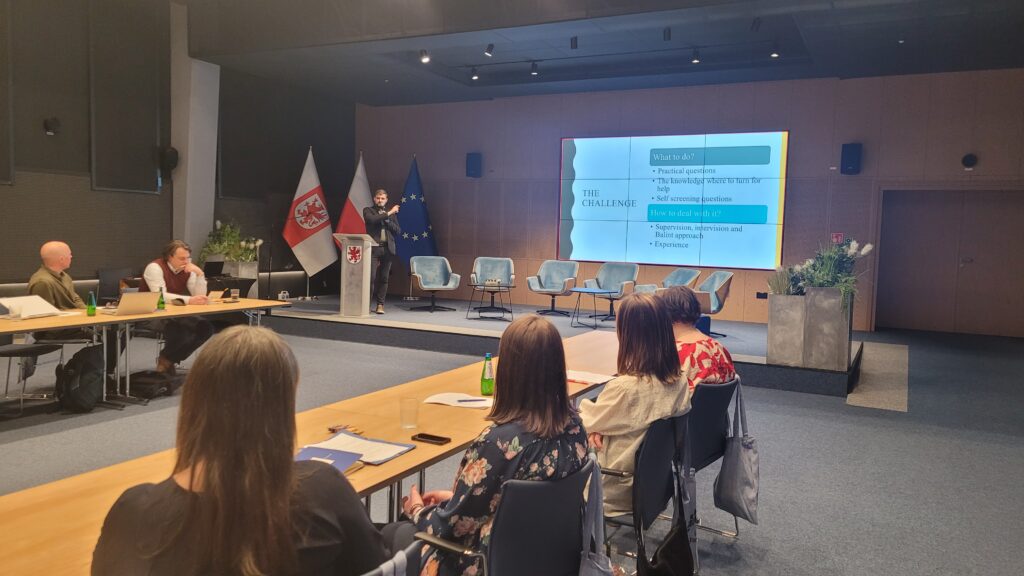
The highlight of the programme was a presentation by Dr Ernest Pūliņš-Cinisa, a doctor and psychotherapist from the Clinic of Psychosomatic Medicine and Psychotherapy at Stradiņš University in Riga, who presented a preliminary draft of a toolkit he is developing to support the work and well-being of link workers and art-facilitators working within ‘Arts on Prescription’ programmes. Being a link worker or arts facilitator involves a path that requires significant resilience, deep empathy, and the ability to hold space for others. It demands a delicate balance of strength and sensitivity. These challenges can be substantial, which is why it is essential that such professionals also receive adequate support and feel that they are not alone in their work.
After the presentations, an expert panel moderated by Krzysztof Żarna brought together practitioners from Poland, Sweden, and Ukraine:
– Anna Prokopczuk-Kwapniewska (certified music therapist)
– Maryana Kodina (actress, director, and cultural manager from Kolomyia)
– Marie Tuvesson (arts facilitator from the Norrbotten Region)
– Edyta Ruta (from PASMO Institute of Social Resilience, coordinator of the “Culture and Health” programme in Poland)
The panel focused on sharing participants’ professional experiences and discussing key challenges, as well as practical approaches to using the arts to improve mental health and well-being.
To encourage relaxation and informal exchange, a creative break was facilitated by Katarzyna Szewciów — a cultural animator and trainer from the Baltic Sea Cultural Centre in Gdańsk, who integrates bodywork, dance therapy, and relaxation techniques in her practice.
After the break, participants took part in a workshop led by Dr. Ernest Pūliņš-Cinis, during which they shared their experiences of implementing social prescribing programmes. In a spontaneous contribution, partners from the City of Kolomyia also presented a set of exercises, including dance and singing, used in their work to support the mental health of Ukrainian communities.
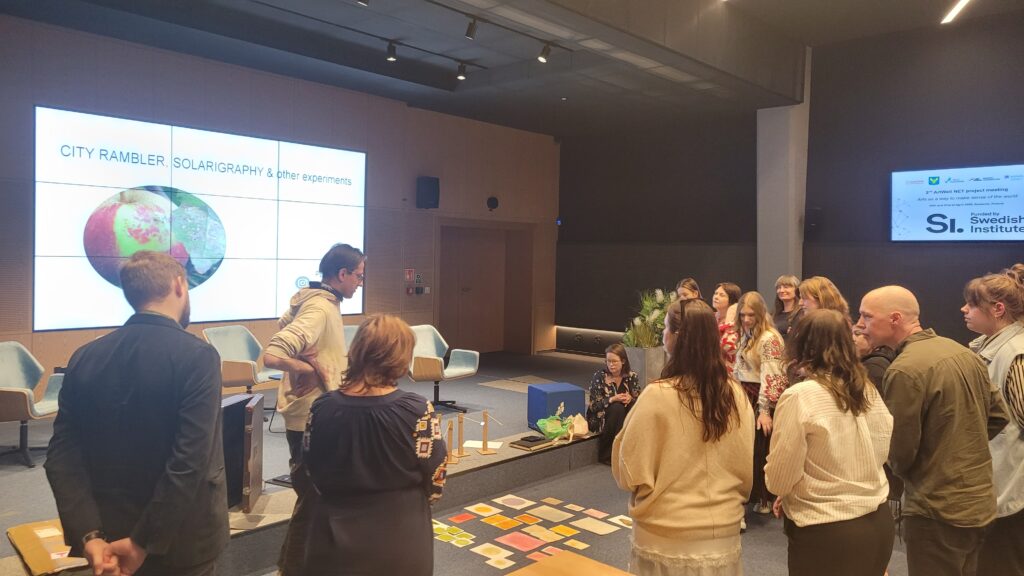
The day concluded with a visual arts workshop led by Paweł Kula — lecturer at the Academy of Art in Szczecin and creator of optical constructions and primitive cameras. Kula works with unconventional light-sensitive materials, including plant-based substances and natural phosphors, and experiments with his own imaging techniques. He engages with historical analogue photographic processes and is a co-creator of solarigraphy, a method enabling extremely long photographic exposures.
On the second day, participants had the opportunity to visit Szczecin’s cultural institutions — the Academy of Art, the Pomeranian Dukes’ Castle, the Philharmonic, and the Dialogue Centre “Upheavals” — gaining insight into local practices and further inspiration for their work. Particular attention was given to the Academy of Art, a modern institution equipped with digital technology studios, craft workshops, multimedia facilities, as well as well-resourced painting and sculpture studios, exhibition spaces, and performance areas. This extensive infrastructure enables students to work in conditions closely resembling those of the professional creative environment.
The meeting in Szczecin marked a significant milestone in the development of the Arts for Health and Well-being Network, bringing participants together, strengthening connections, and sparking new inspiration to further enhance their work.
The journey now continues: the next step is to complete the toolbox and actively engage a wider circle of stakholders, building a strong and vibrant network of allies for art-based social prescribing across the Baltic Sea Region.
The project is funded by the Swedish Institute:

Project partners:
