Interreg Central Baltic projects join forces to improve labour market opportunities for senior workers
With the ageing demographics reshaping labour markets, multiple Interreg Central Baltic projects have taken on the challenge to enhance employment opportunities for people in their pre-retirement and retirement age. Among these initiatives are the NDPHS project Solutions for Age-Friendly Employer (SAFE) led by Tallinn University Haapsalu College and Silver Strategies led by the Latvian Chamber of Commerce and Industry. The projects aim to improve age management practices and foster age-inclusive workplaces that support meaningful working lives before and beyond retirement.
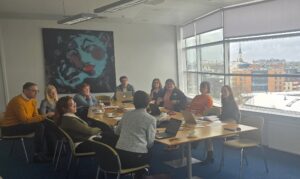 During the SAFE transnational collaboration meeting in Tallinn on 7-8 January 2025, the project partners had an opportunity to sit together and chat with Piret Potisepp from the Estonian Chamber of Commerce and Industry, representing the Estonian partner in the Silver Strategies project.
Why senior workforce inclusion matters
The continued participation of senior workers in working life is critical for both economic sustainability and individual well-being. Economically, harnessing the skills and experience of senior workers addresses labour shortages and supports sustainable economic growth. This is particularly important in industries where labour shortage is acute and the proportion of seniorworkers is high, such as in the health and care sector.
On a personal level, staying engaged in meaningful work promotes active and healthy ageing, helping to reduce social isolation while also ensuring financial stability. It provides senior workers with a sense of purpose and accomplishment, highlighting the value of their unique contributions both in the workplace and in their personal lives.
Work is more than just a means to earn a living; it is a way to connect with different generations and to share the wealth of individual knowledge and experiences. Workplaces that recognise and nurture this potential not only benefit from the knowledge and expertise of senior employees but also create environments that honour the dignity and aspirations of workers at every stage of life. These benefits underscore the importance of creating work environments that encourage older workers to stay active in their professional roles.
This understanding forms the backbone of both SAFE and Silver Strategies as they work to address the barriers that senior workers often face in the labour market.
Tackling workplace barriers together
Both SAFE and Silver Strategies address significant workplace challenges such as organisational practices, structural issues, and societal norms that often limit employment opportunities of senior workers and push individuals towards retirement at a fixed age. Yet, many senior workers are eager and capable of contributing to the workforce even beyond the official retirement age.
Silver Strategies champions age diversity in workplace policies and practices. Recognising that many companies lack specific strategies to address age-based discrimination, the project aims to fill this gap. Its flagship initiative is an online handbook designed to help organisations embrace and benefit from an age-diverse workforce.
One key finding is the need for open societal conversations about ageing and the role of 55+ year old employees to ensure fair recruitment and HR practices. Participants in the Silver Strategies pilot projects have implemented diverse initiatives within their organisations, with the outcomes set to be shared in spring 2025. These results aim to inspire other organisations to launch their own impactful initiatives.
SAFE, meanwhile, delves into work, management ,and workplace adaptations to unlock the potential of employees across all age groups, with a particular focus on senior workers. By shaping workplace policies, culture, and practices, the project promotes sustainable careers, empowering individuals to work confidently up to and beyond their official retirement age.
To achieve this, SAFE is developing a toolbox for employers to enhance age-friendliness in the workplace. This toolbox will include an organisational self-assessment test, helping workplace leaders understand their institutional starting point and providing them with tailored resources and advice. Although initially tailored for and piloted in the health and care sector – an industry in the Central Baltic region with a high proportion of senior workers – the toolbox will be applicable across different sectors.
Joining forces for greater impact
While Silver Strategies approaches its final half-year of implementation, SAFE is in the early stages of its journey. This timing creates opportunities for the two projects to learn from each other, share resources, and collaborate on awareness-raising initiatives. Together, these projects are making strides toward reshaping workplace practices and ensuring that senior workers have the opportunity to thrive in their careers.
The SAFE project team extends its gratitude to Piret Potisepp for her valuable contributions during the Tallinn meeting and looks forward to continued collaboration.
The “Solutions for Age-Friendly Employer (SAFE)” project joins four partners from Estonia, Finland, and Sweden. The cooperation aims to strengthen and improve employment opportunities for employees aged 55+ specifically focusing on the health and wellness sectors. The project is financed by the European Regional Development Fund through Interreg Central Baltic 2021-2027.
