The MentalHealthMatters project culminates in Vilnius
 Imagine the ideal workplace of 2035. What does it look like? What steps are needed to achieve it? These are the key questions that have been driving the MentalHealthMatters project, dedicated to paving the way to healthier and more sustainable workplaces.
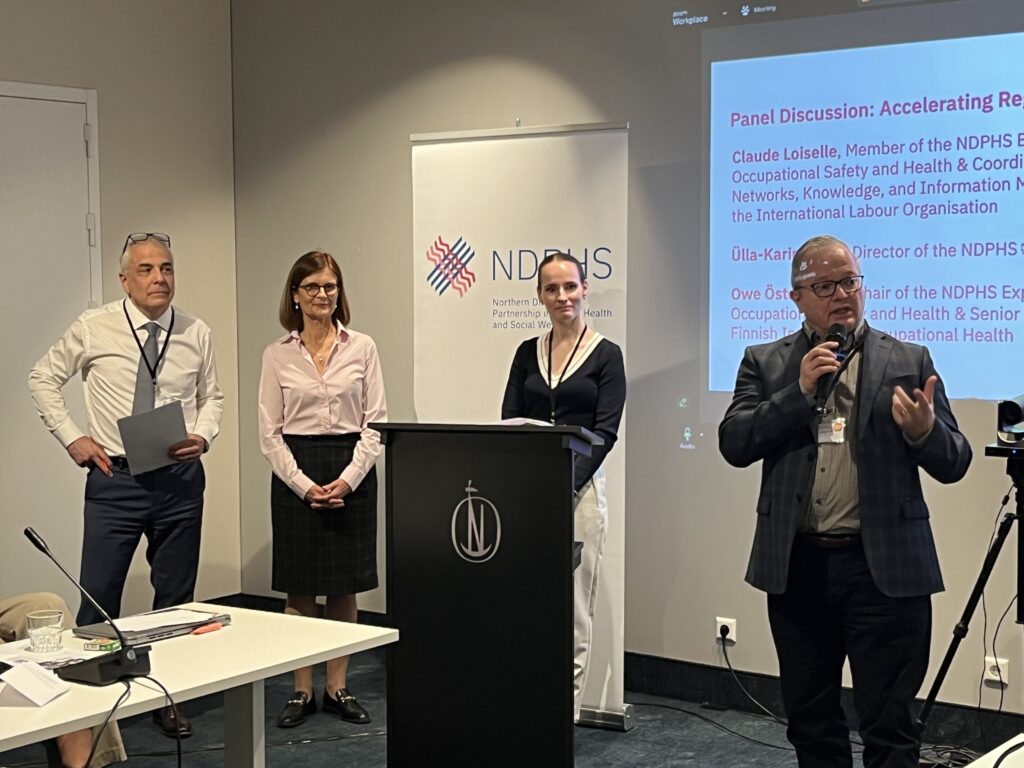
A key component of the project has been the establishment of National Communities of Practice in each of the participating countries, namely Estonia, Finland, Latvia, Poland and Norway. In Vilnius, the work of these Communities of Practice took centre stage, as the project partners presented the country-specific recommendations and proposals developed by them, focusing on improving the psychosocial work environment. The concrete proposals were delivered to senior officials from the Ministries of Health, the WHO Regional Office for Europe, the International Labour Organisation, and the European Commission, facilitating exchange of knowledge.
The project outcomes reveal diverse yet often similar challenges across the Baltic Sea Region, requiring tailored solutions to each country’s unique circumstances. Highlights from each country include:
- Norway’s efforts to improve the psychosocial work environment for migrant workers, particularly in the cleaning industry.
- Finland’s aim at increasing the competences and skills of Occupational Safety and Health (OSH) professionals through education and training.
- Latvia’s work on raising awareness and readiness among employers in small and medium-sized enterprises, to identify, assess, and prevent psychosocial risks.
- Poland’s increased emphasis on workplace health promotion and the creation of a culture of health to help employers address psychosocial risks.
- Estonia’s investigation into the needs of small businesses, with a central theme being the reduction of stigma around mental health at work.
The meeting also addressed the systematic nature of workplace mental health, highlighting that while employers bear the ultimate responsibility for ensuring a good and safe work environment for their employees, addressing psychosocial risks requires a more systematic approach involving a whole ecosystem of stakeholders and actors, from individual workers to EU institutions.
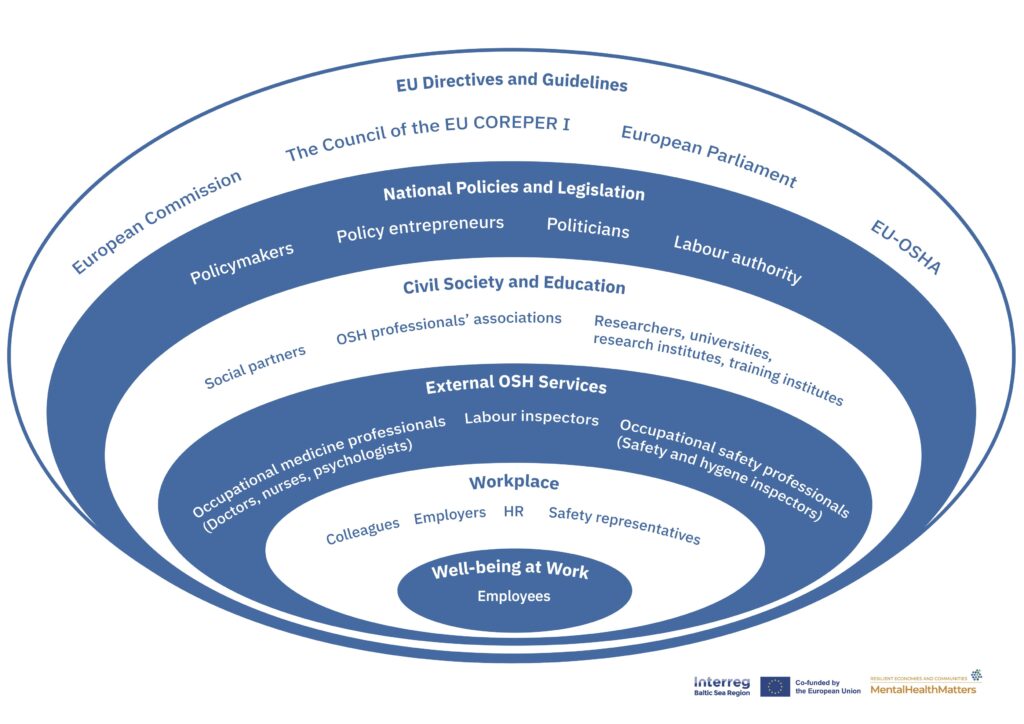
The project has aimed to pave the way for sustainable system-level change by fostering transnational collaboration across sectors and levels. Key areas for future joint efforts in the Baltic Sea Region and beyond were identified, including:
- Two-way collaboration with European actors like the European Commission and EU-OSHA to inform EU initiatives with data and knowledge, and to bring the European actions to the national level.
- Learning from diverse policy and regulatory processes in the neighbouring countries.
- Driving social innovation and their transfer through transnational projects.
- Prioritising long-term transnational professional networks to ensure sustained progress.
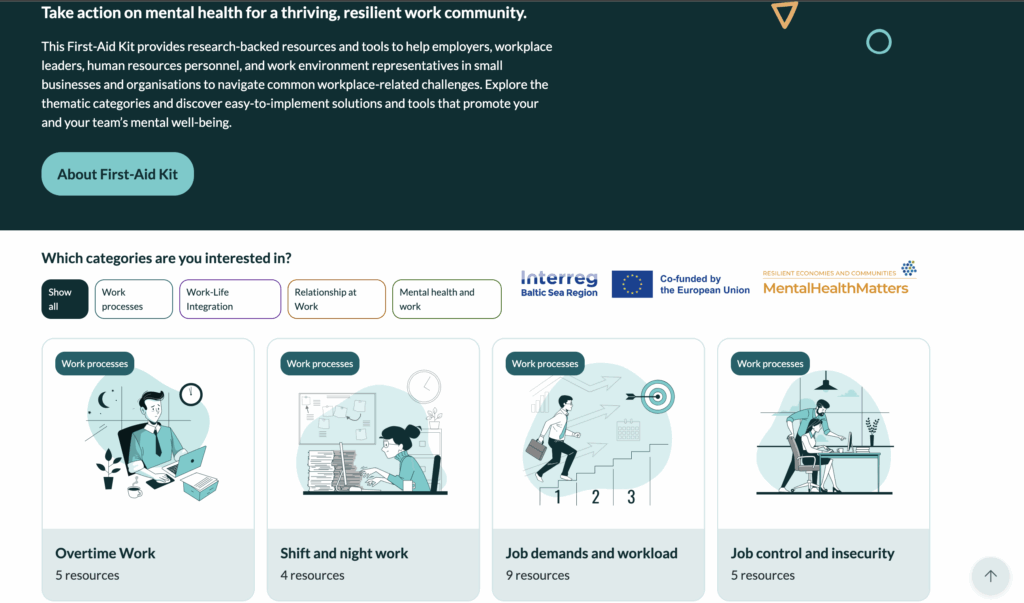
A major outcome of the MentalHealthMatters project has been the development of the First-Aid Kit for Mental Health: Supporting Workplace Well-being. This online tool is designed as a curated collection of evidence-based resources and tools for workplace leaders and human resources to improve workers well-being. Tailored specifically for small businesses and organisations with limited access to OSH resources, it provides easy-to-implement, low-resource actions. This tool, which will initially be available in English, Estonian, Finnish, Latvian and Norwegian, will be launched soon this Spring.
In conclusion, the MentalHealthMatters project has delivered valuable insights and practical tools for supporting mental well-being in workplaces across the Baltic Sea Region. The outcomes that were presented underscore the importance of addressing psychosocial risks with the same seriousness as physical risks and highlight the necessity of collaborative and cross-sectoral efforts at both national and transnational levels to foster healthier and more sustainable working lives.
We extend our warmest gratitude to our project partners for their tireless work and to Interreg Baltic Sea Region for providing the much appreciated funding for this project.
MentalHealthMatters receives financial support from the Interreg Baltic Sea Region and is co-funded by the European Union.