ArtWell NET Meets in Ukraine: Two-Way Learning Through Arts, Health and Resilience
The third international meeting of the Arts for Health and Well-being Network (ArtWell NET) brought partners from Ukraine, Sweden, Poland and Estonia together in Kolomyia, Ukraine. The meeting focused on how the Baltic Arts on Prescription model could be adapted to the Ukrainian context and what the wider Baltic Sea Region can learn from Ukraine’s experience of supporting mental health during wartime.
Hosted by Kolomyia City Council in cooperation with its Department of Education and Culture and Department of Investment Policy, the meeting combined international discussion with practical workshops for professionals working in education, culture and mental health.
Connecting experience from Ukraine and the Baltic Sea Region
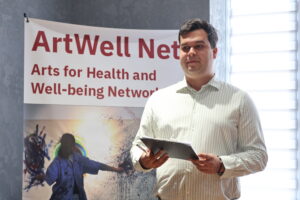 During the meeting, partners explored how Arts on Prescription programmes have been developed in different parts of the Baltic Sea Region. They discussed the roles of health professionals, link workers and arts facilitators, as well as the practical steps needed to connect people with suitable arts and cultural activities.
The Ukrainian partners presented their own approaches and reflected on the work already taking place in Kolomyia. Maryna Kodina, Director of the Department of Education and Culture, and psychologist and emotional development programme author Maryna Tymofiichuk shared examples of methods used to support the local community.
The discussions also looked at how the Baltic experience could be adapted to Ukrainian needs and circumstances. At the same time, Ukraine’s experience of supporting veterans, military families, internally displaced people and other communities affected by war has much to offer the rest of the region.
This exchange works in both directions. While Baltic and Nordic partners can share experience from developing Arts on Prescription programmes, Ukraine can help the whole Baltic Sea Region better understand how culture and community-based support can contribute to mental health, recovery and resilience during a crisis.
Bringing different approaches together
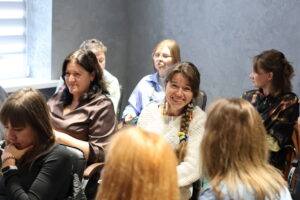 The international meeting was accompanied by a practical event for psychologists, education professionals, representatives of cultural institutions and community support organisations.
Participants took part in workshops covering a broad range of creative and therapeutic approaches, including neurography, sand therapy, art therapy, music and rhythm, movement, photography and fluid art. The sessions offered simple and practical methods for easing emotional tension, working with difficult feelings and supporting connection and recovery.
Bringing these approaches together gave participants an opportunity not only to learn new methods, but also to discuss how they could be used in their own work with children, adults and communities.
The meeting concluded with a discussion on the next steps for cooperation and the presentation of professional development certificates to participants.
Building a long-term network for arts and health
ArtWell NET was launched in Stockholm in December 2025 to create a long-term network for learning and cooperation between the health and cultural sectors.
Led by Sunderby Folk High School and funded by the Swedish Institute, the partnership brings together Sunderby Folk High School, Kolomyia City Council, the West Pomeranian Region, Region Norrbotten and the NDPHS Secretariat. The network connects artists, cultural organisations, health professionals, local authorities and policymakers from across the Baltic Sea Region, the Nordic countries and Ukraine.
A central focus of the project is Arts on Prescription – a form of social prescribing in which people are referred to group-based arts and cultural activities to support their health and well-being. ArtWell NET aims to strengthen cooperation between the professionals involved, share practical experience and help arts-based approaches become a more established part of public health work.
Following its launch in Stockholm, the network held its second international meeting in Szczecin, Poland in April 2026. That meeting focused particularly on the work and well-being of link workers and arts facilitators, including the development of practical support materials for professionals working in Arts on Prescription programmes.
Learning from one another and moving forward
The meeting in Kolomyia continued this work by bringing the discussion closer to local professionals and communities in Ukraine. It showed how international cooperation can be grounded in practical experience and how much partners can learn from one another when that experience is shared openly.
A special thank you goes to Dmytro Kopyltsiv, Maryna Kodina, Elias Sandling, Maryna Timofiychuk, Ulla-Karin Nurm and Wiebke Marcus for sharing their experience, guiding the discussions and bringing people together. We also thank all the local organisers, speakers, workshop leaders, participants and project partners whose commitment made the meeting possible.
The ArtWell NET project is implemented with financial support from the Swedish Institute.