Resource - NDPHS

Knowledge & Resources: 2026

Screening and treatment practices for tuberculosis infection in Nordic, Baltic and Central European countries and Ukraine

This study examined tuberculosis infection (TBI) management policies and practices across 10 Nordic, Baltic, and Central European countries within the NDPHS network, as well as Ukraine. The findings revealed significant differences in screening, preventive treatment, and access to medicines, particularly for refugees and multidrug-resistant TBI. The study highlights the need for stronger coordination and more harmonised approaches to targeted screening and treatment to support TB control in low-incidence countries.

European Journal of Clinical Microbiology & Infectious Diseases 

Authors: Thijs Feuth, Piret Viiklepp, Iiris Rajalahti, Elmira Gurbanova, Mikko Vauhkonen, Karine Nordstrand, Melanie Stecher, Ülla-Karin Nurm, Yana Terleeva, Tuula Vasankari
Keywords: Tuberculosis, Screening
2026

Workplace Culture: Key to Loyalty and Psychological Safety During Career Transitions

In the third episode of the “SAFE and Sound” podcast, our host Heini Maisala-McDonnell from Metropolia University of Applied Sciences welcomes at the studio Katja Hautala, Human Resources Director from⁠ Canon Finland⁠, and Antti Harjuoja, NextMile. The discussion explores how to support late-career development, how organisational values and leadership shape long-term commitment, and what lessons can be learned from international best practices in age-friendly work.

This podcast is part of Interreg Central Baltic funded project SAFE – Solutions for Age-Friendly Employer. Available on Spotify – “Tune in Health”.

Keywords: Active and healthy ageing, Ageing population, Workplaces, Well-being, Older adults, Mental health, Intergenerational contacts
2026

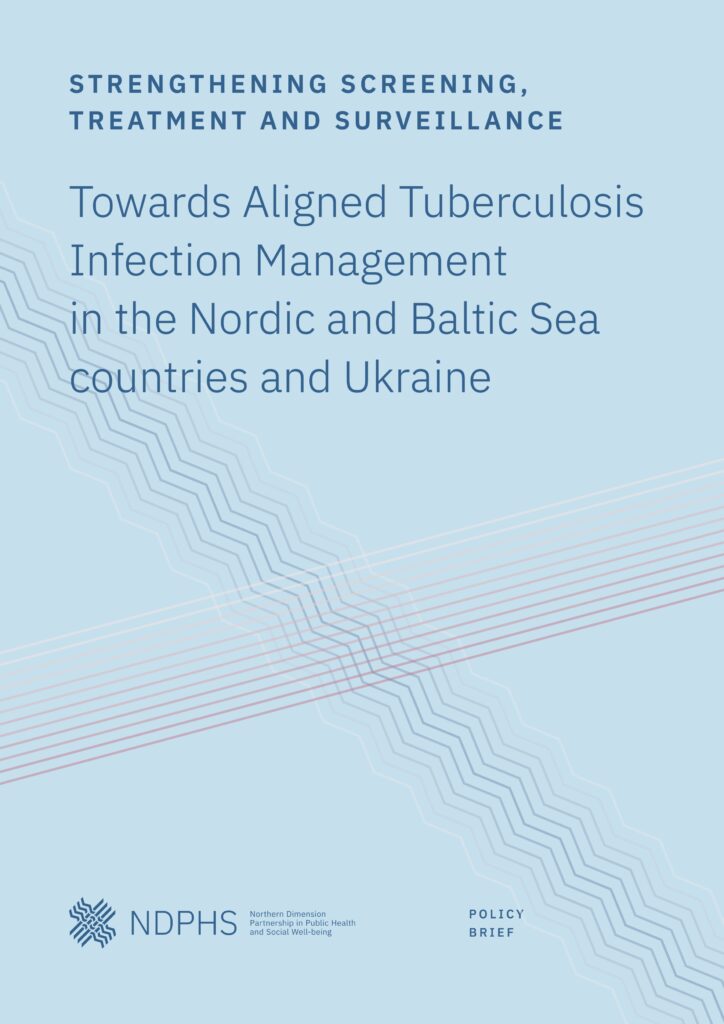
Towards Aligned Tuberculosis Infection Management in the Nordic and Baltic Sea countries and Ukraine

The Policy Brief on strengthening tuberculosis treatment, screening, and surveillance presents a strategic framework for eliminating tuberculosis in the Nordic-Baltic region. It stresses the need to move from fragmented local approaches to standardized regional cooperation. The brief calls for modernized treatments and stronger data-tracking systems, with a focus on addressing the root of infection rather than only active cases. Through unified action and shared policy, the region aims to become a global model for tuberculosis elimination.

This Policy Brief has been produced within the Latent Tuberculosis Infections Inventory project, co-funded by the Norwegian Ministry of Health and Care Services.


Keywords: HIV, TB & Associated Infections, Ukraine, Tuberculosis
2026